Two roads diverged in a wood, and I, I took the one less traveled by, And that has made all the difference.
Jeff opens the memoir he wrote for his grandchildren with Robert Frost’s poem. “My life has been charmed,” he writes, “and I’ve been extremely lucky to have Tiffa to share it. We never made a plan, but together we made some good choices. Opportunities kept occurring, and we kept taking them.”
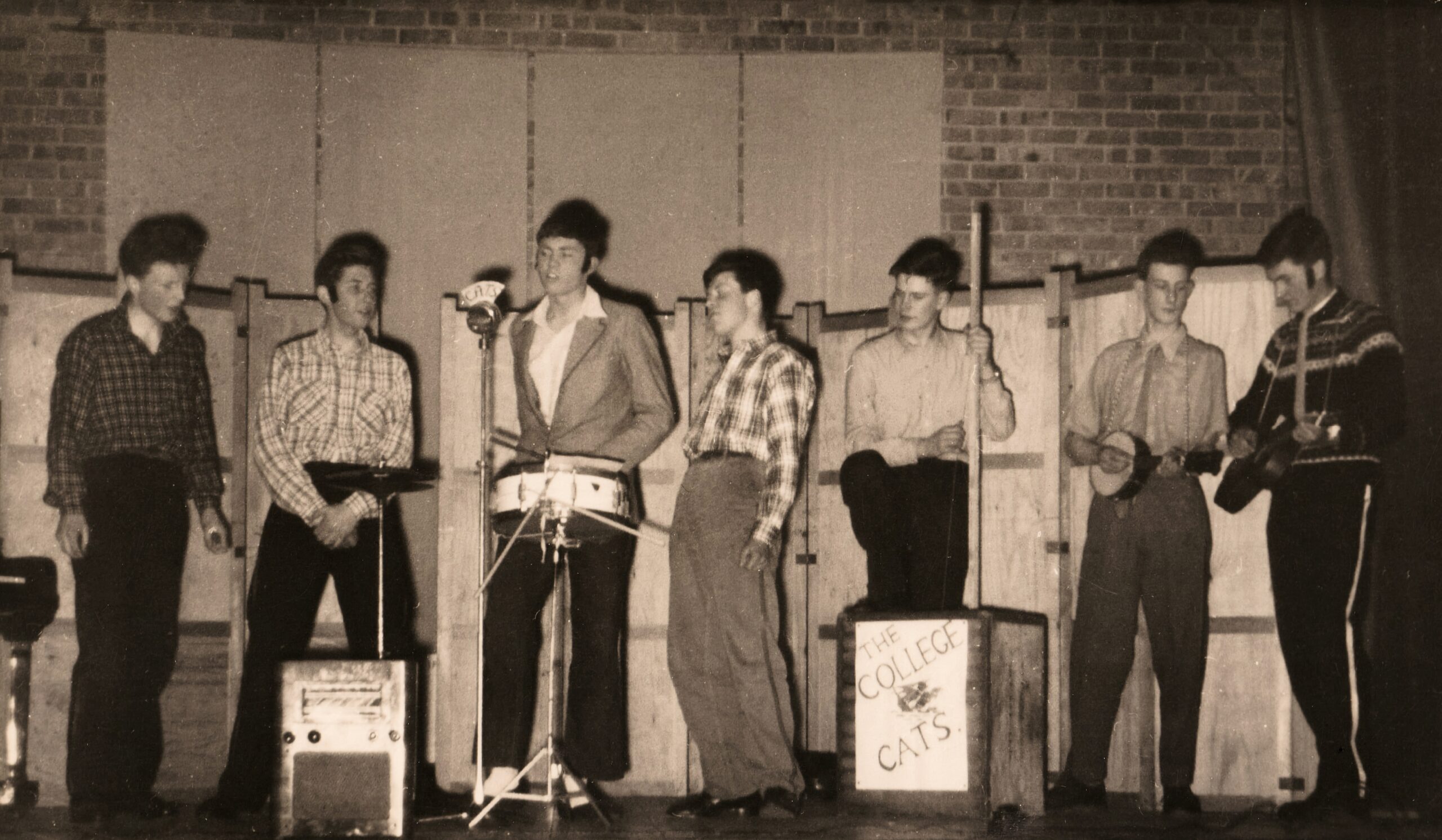
Jeffrey Powell Meadows was born on July 9th 1943 at Holybourne, near Alton, and grew up behind his parents’ electrical shop at the top of Market Street (see Jeff & Roger). He walked to St Lawrence School every day, down past the abattoir to Cut Pound and up Amery Hill, buying a sherbet with a liquorice straw on the way home. Much of his free time was spent roaming Flood Meadows, Ackender Woods and the old railway embankment with his cousin Roy Mortara, playing cowboys, making bows and arrows and fighting aerial battles with box kites. He passed the eleven-plus and went on to Churcher’s College in Petersfield as a boarder in Rodney house. Only later did he learn that Whisk’s sister, Auntie Dora, had paid his fees. Unlikely as it may seem, he was also a vocalist in the school skiffle band, The College Cats.
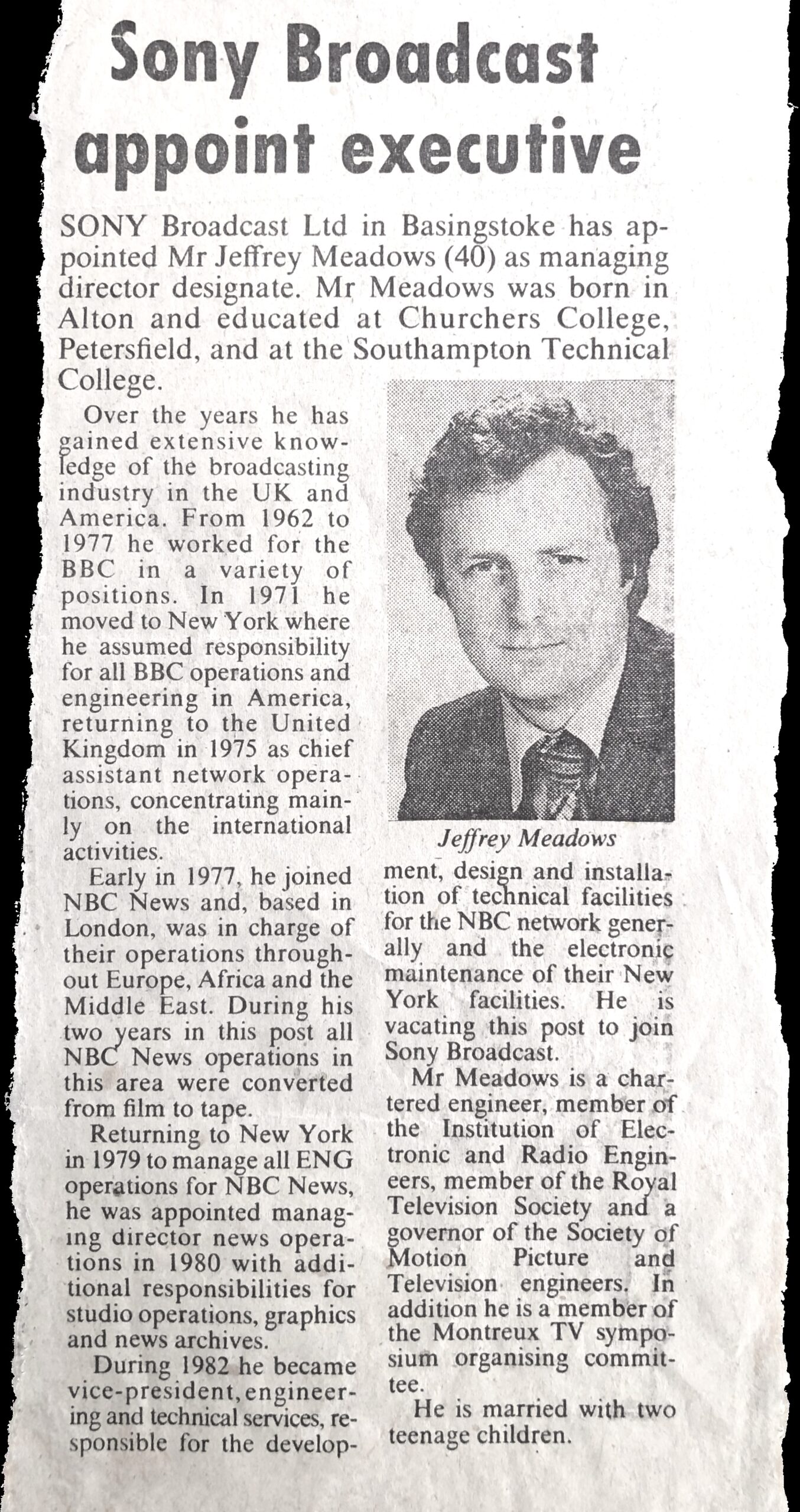
Jeff very nearly became a journalist. He had decided he needn’t bother with A levels, since journalists started at the bottom making tea, and had lined up a job with Surrey and Hants Newspapers. Whisk had a better idea. The BBC turned down his first application but told him to try again with a qualification, so he studied communication engineering and electronics at Southampton, commuting daily in a little Austin green minivan. He joined the BBC as a direct-entry engineer and was sent to its engineering school at Wood Norton Hall near Evesham, arriving in a red 1934 MG roadster. Back in London he volunteered for nights in Studio H, the BBC’s new experimental colour studio, where the engineers worked with cameras that barely worked to help Britain choose between the American, French and German colour systems.
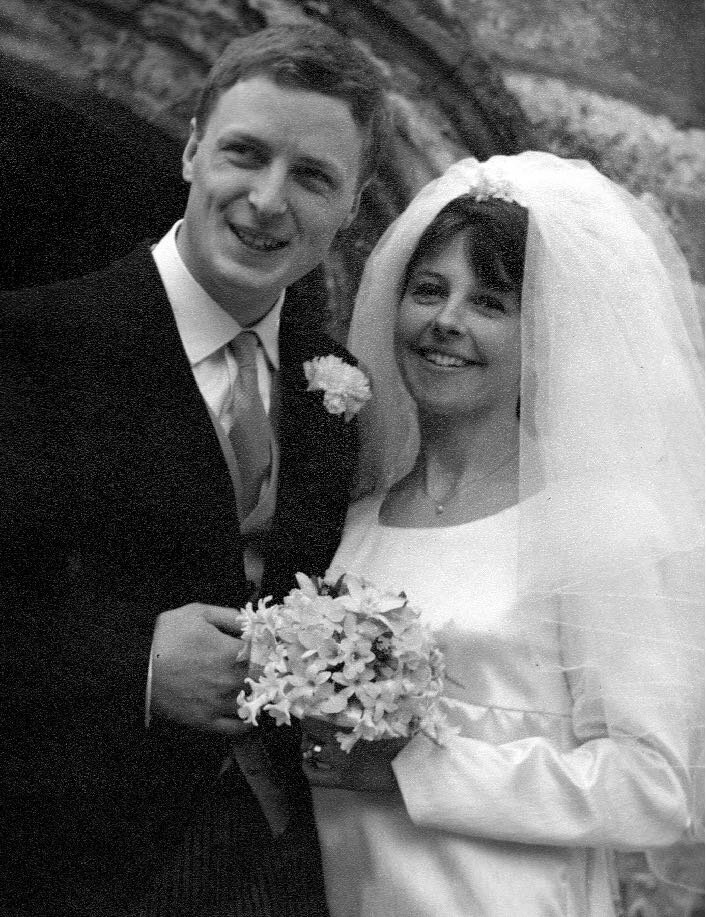
Jeff and Tiffa married on 16 March 1966 at St Lawrence Church in Alton, across the road from his old primary school. It was a Wednesday, early-closing day at the shop, which Jeff suspects only confirmed the view of Tiffa’s family that he was the son of shopkeepers. They had bought Burnt Hill Cottage, at Lower Bourne near Farnham, which needed renovation, and when the seller came back offering twice what they had paid for it, they sold and bought 1, 2 and 3 Church Cottages at Upper Farringdon instead. The three cottages became ‘Churchers’ and son Tom and daughter Georgia were born while they lived there.
In 1971 the BBC sent Jeff to New York as its senior engineer for North America, working from Rockefeller Center. His first big assignment was Apollo 15: he watched the launch at Cape Kennedy, then flew to Houston to run a makeshift studio at NASA for James Burke and Patrick Moore while the astronauts drove the first lunar rover. Over the next few years he covered US politics, boxing and much else. Heavyweight boxing gave him some memorable nights at ringside with the BBC’s Harry Carpenter. In January 1973 they were in Jamaica for the “Sunshine Showdown”, where George Foreman knocked Joe Frazier down six times to take the title before a furious mob overran the ring. Two months later, in San Diego, Ken Norton broke Muhammad Ali’s jaw.
In October 1974, Ali challenged Foreman in Kinshasa, Zaire, in the “Rumble in the Jungle”. Jeff flew out on a chartered press plane full of rowdy sports journalists. The fight was to start at 4.30 in the morning, peak viewing time in America. Jeff set up his gear at ringside and tested the circuits to London the evening before. When he reached the stadium, after abandoning the taxi and walking the last half mile through the crowds, all three circuits were dead. Checking the unused lines under the ring, he eventually raised the exchange in New York and persuaded the operator to patch him through to the BBC’s permanent line to Broadcasting House. Harry’s commentary went out on that single circuit to both BBC and ITV, and Reg Gutteridge, ITV’s commentator, took being left on the sidelines with good grace. Ali, the 4–1 underdog, won by a knockout in the eighth round.
In 1976 NBC borrowed Jeff from the BBC to manage its Bicentennial broadcasts from Europe. Back at the BBC in January 1977 he spent a week in Plains, Georgia, with Jimmy Carter before his inauguration. Later that year NBC offered him a job. News was moving from film to video and Ieff built NBC’s new London bureau above the YMCA in Tottenham Court Road. He covered the Silver Jubilee and, in 1978, the election of two popes in a single summer.
In 1979 Jeff moved to New York to run NBC News operations, and later became its VP Engineering, choosing the lighter Ikegami and Sony cameras over RCA’s own, and buying the first Quantel Paintboxes for the network’s graphics department. He was accredited for a time to the White House press corps and travelled extensively including coming back to London came back to London for Charles and Diana’s wedding in 1981. The family spent a very happy five years in Chappaqua NY. Working every weekend the four of them even managed to build a cabin in Woodstock, New York, on twenty acres of woodland paid for with money left to them by Tiffa’s father.
In 1984 Sony’s Masahiko Morizono asked Jeff to run Sony Broadcast, based in Basingstoke, and the family came home to Hampshire. Jeff got to know Tokyo very well over the next five years, visiting every three or four months. Sony Broadcast outgrew its Basingstoke offices and Jeff supervised a new headquarters building near the M3. But he never moved in. Sony had decided to fold the company into Sony UK, so when the rest of the company moved in, Jeff moved on. Quantel’s MD Richard Taylor had offered Jeff a lift home from a conference in Europe and on the flight he made him another offer: Richard would become chairman at Quantel, and Jeff its managing director.
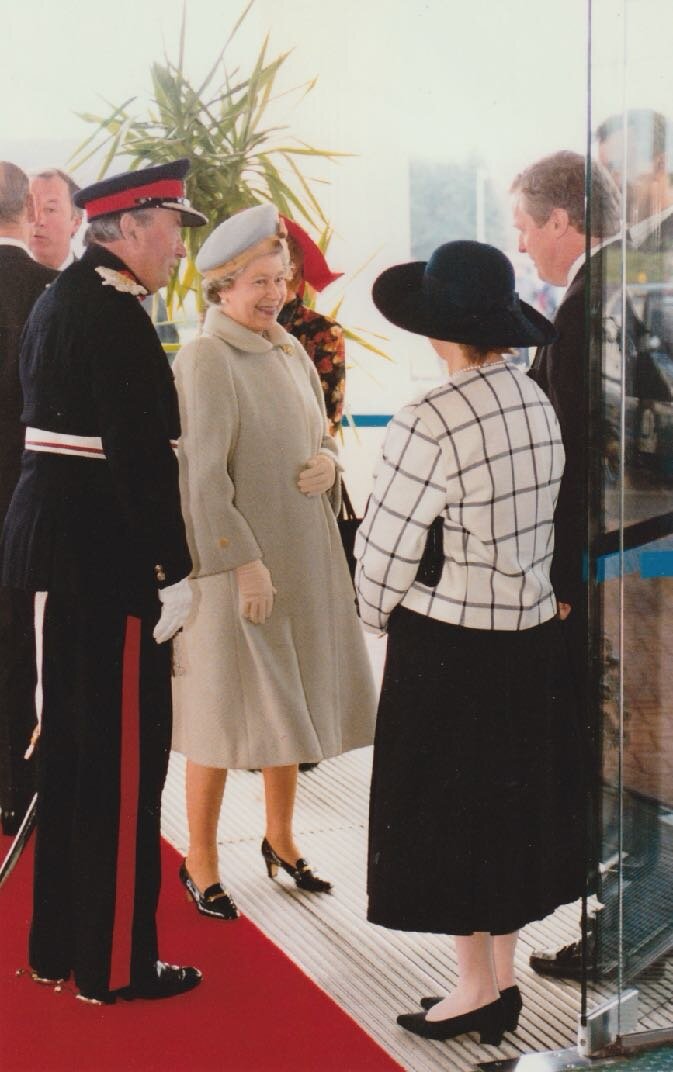
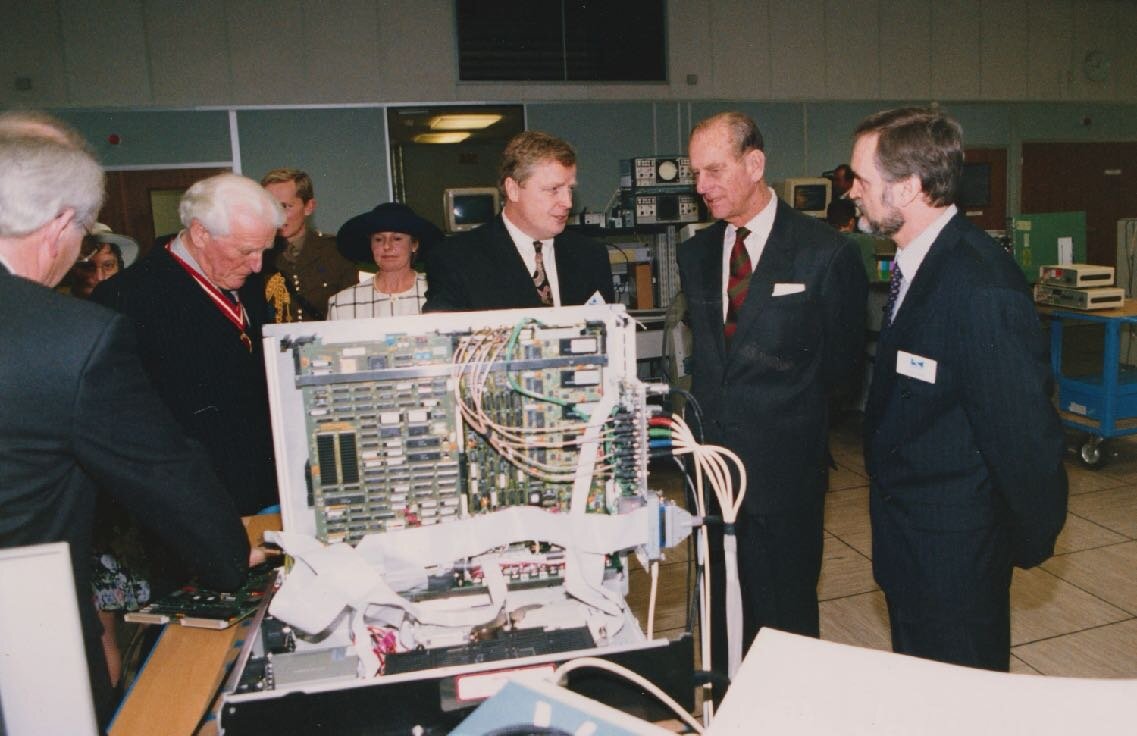
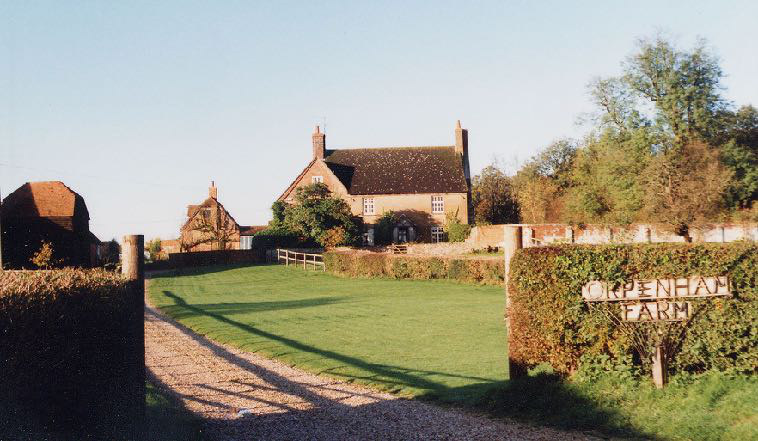
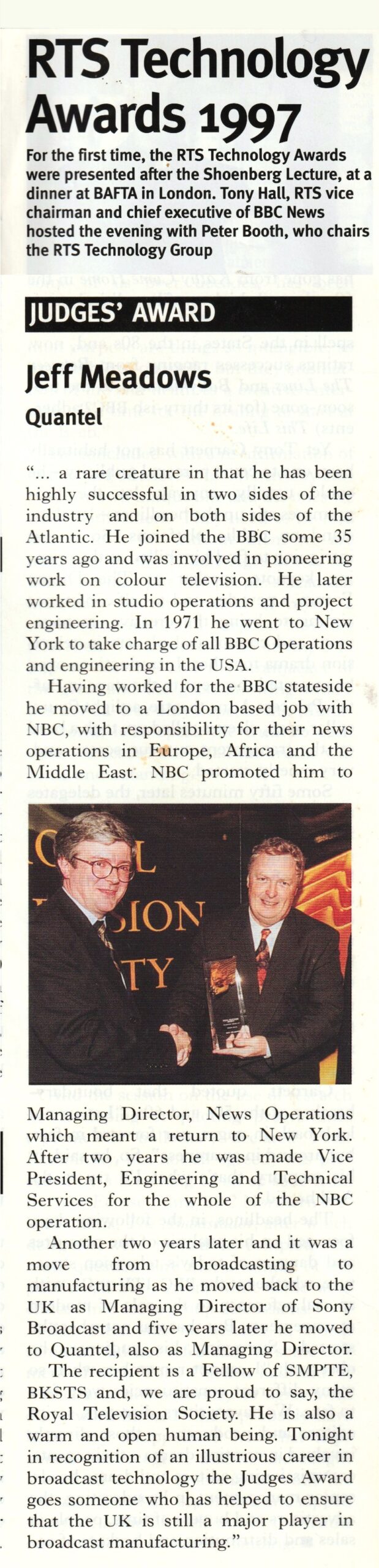
The family moved to Orpenham Farm near Newbury, bought at auction after Tiffa’s instruction, “Don’t come home without it!” In February 1993 the Queen and the Duke of Edinburgh came to Quantel to mark its eighth Queen’s Award; Jeff showed Prince Philip round, and the company surprised the Queen with a Paintbox picture of herself receiving the Derby trophy, something she’d never achieved in real life. After Quantel’s ninth award, Jeff was among those invited to the Queen’s reception at Buckingham Palace on 4 March 1996. In 1997 he received the Royal Television Society’s Judges’ Award, and in 1998 he retired early, as he had always planned.
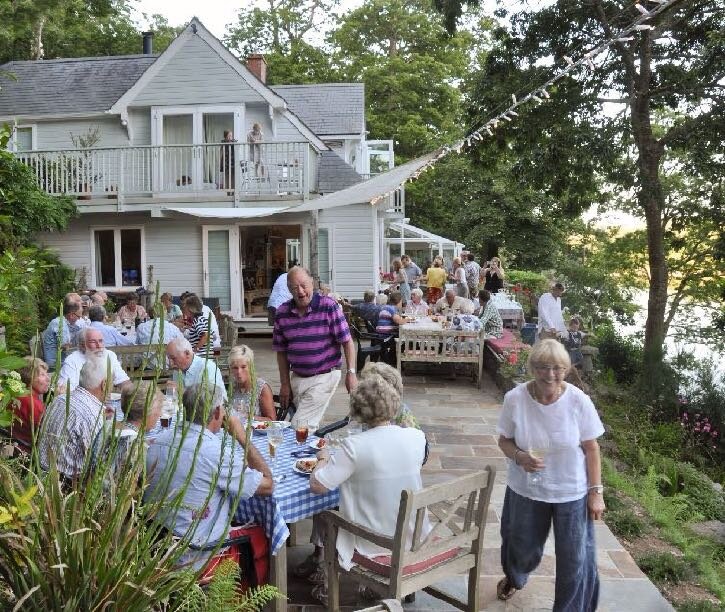
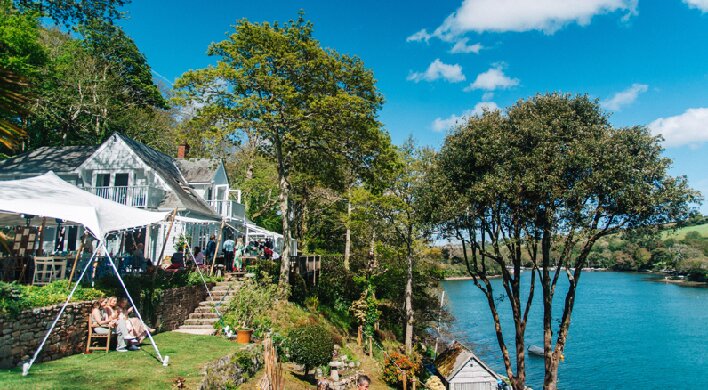
Jeff and Tiffa then moved to Poltoge at Port Navas, on a creek of the Helford River in Cornwall. Jeff served as a governor at the local primary school for twelve years, chaired the village regatta for eight, played golf and bridge, and taught himself to make websites, becoming the go-to person for any local group that needed one but couldn’t afford to pay.
In 2023 Jeff and Tiffa left Cornwall for West Sussex to be closer to family. He now looks after this site, for which he has transcribed his father’s and his great-grandfather’s notebooks, and its sister site, beardmorehistory.com, In January 2026 he finished a memoir for his grandchildren which has provided much of the material for this page..
There’s more about Jeff and Tiffa’s life together on Tiffa’s page.
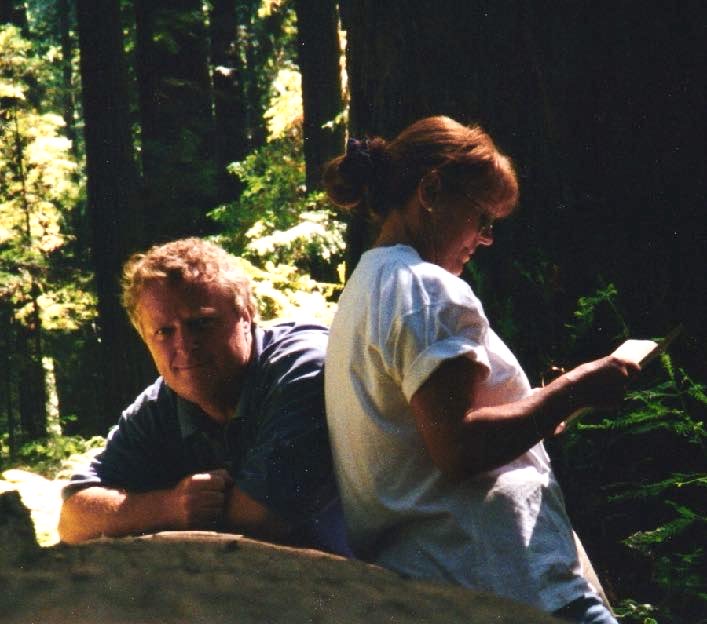
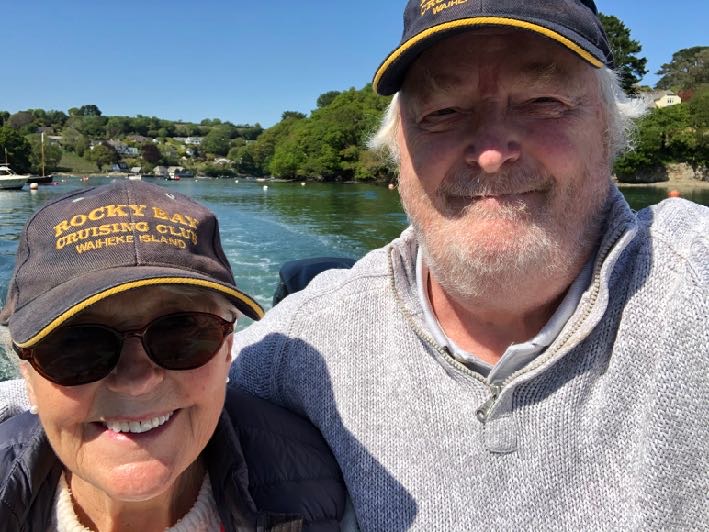
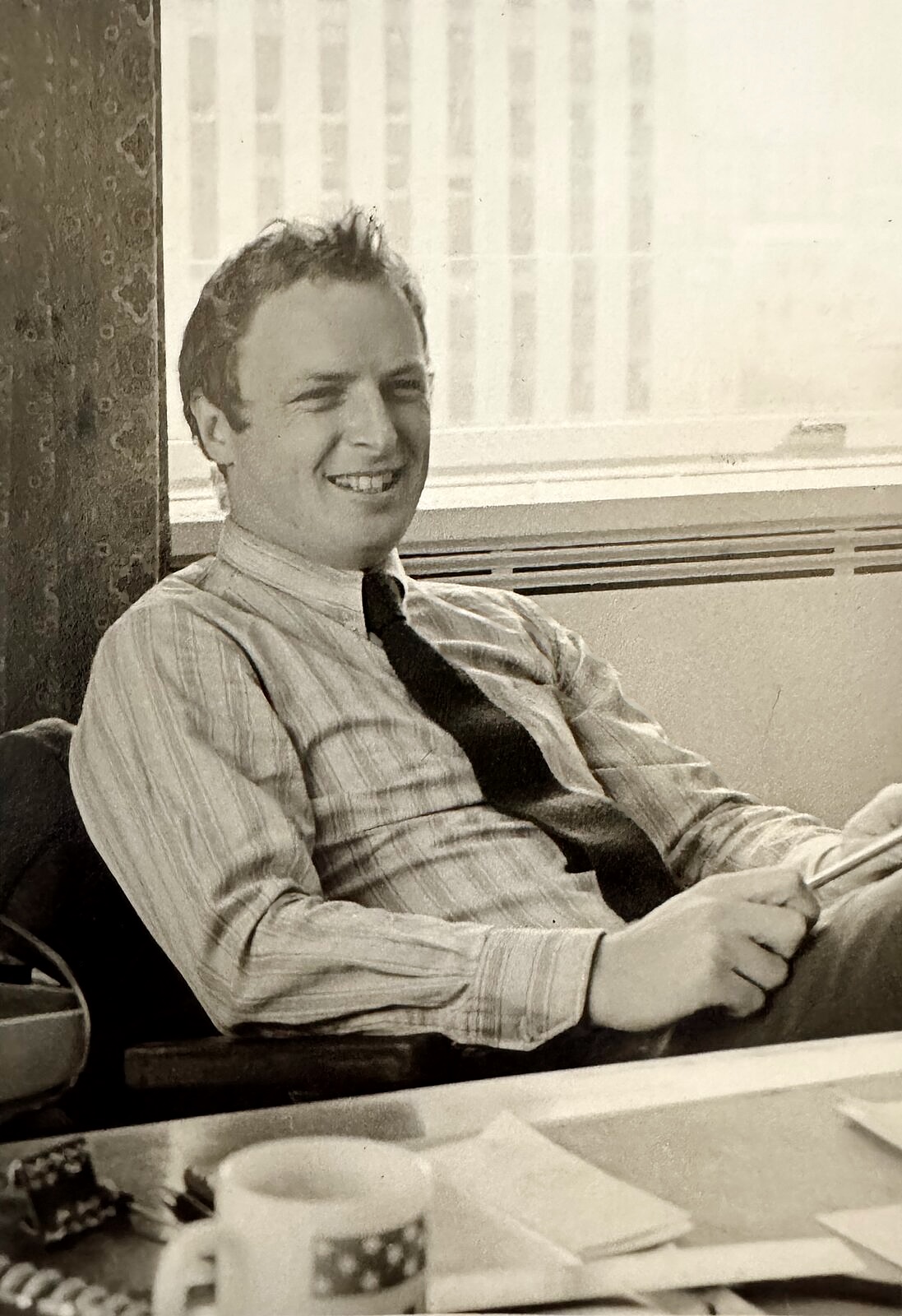
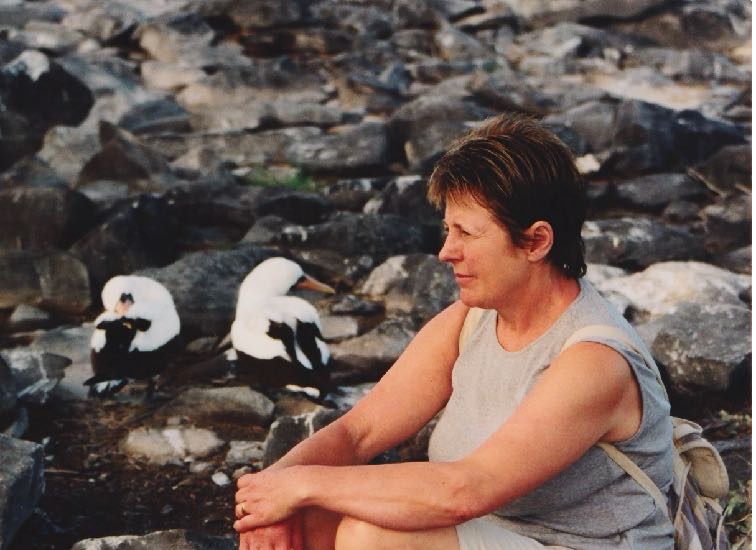
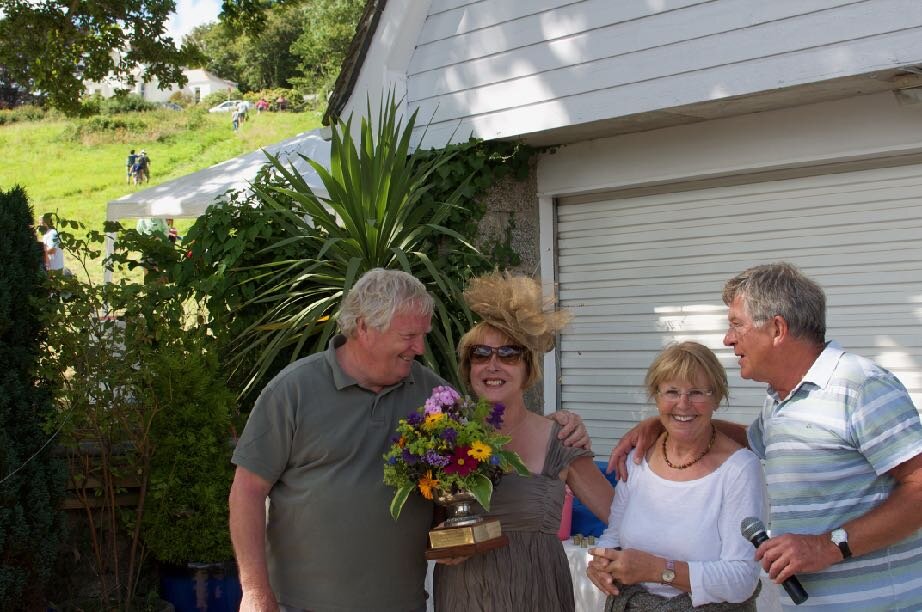
Roger’s storyJeffJeff and Tiffa in the 1960sJeff and Tiffa’s wedding, St Lawrence, Alton, 1966Jeff & Tiffa in Oregon 1995Tiffa & Jeff on Port Navas creek, May 2020
A transcript of 12 handwritten pages in which Edwin Henry Meadows continues the family book begun by his grandfather. The first few pages are in pencil, the rest in ink. Some paragraph breaks have been added; spelling and punctuation follow the original.
From here this book is continued by Edwin Henry Meadows [born at “Arden” Parkhurst Rd. Bexley Kent on 16th Nov 1906] and grandson of Edwin Lewis. It was my intention to write details in a more chronological order than was done by Grandpa but owing to the very limited knowledge I have shall note it as it occurs to me.
Apparently Edwin Lewis acquired a small cement works at Rochester the family then living at Frisbury Hill – his two sons at one time bought a barge between them which they hired out; the old chap who operated it came to them one day & reported that the bottom had fallen out, so that was the end of the barge which neither had ever seen.
Frederick John, became publican and in turn had The George & Dragon, Westerham – The Organ at Ewell and the Alma at Deal. When he left The George & Dragon he built a small cottage in London Rd, Westerham named “Islingham” – It was here Grandma Jessie Emily spent her last days – and Fred operated a taxi hire service, in this capacity he very frequently drove Winston Churchill to his home at Squerries Court. Fred died on Dec 1950.
Both he and his sister Grace had inherited the artistic abilities and Grace made several watercolour copies of James Meadows’ superb oil paintings. She had always led me to believe she was well versed in the family history and it was a dissapointment to find that none of this knowledge had been recorded. She died in [blank left] and was buried at Deal.
And now to my father Orestes Lewis – (Orey). I could write a book about him, he had so many accomplishments and I am still proud to list them for the all and sundry.
I believe he was born at Woodford, at any rate when he was a small boy he used to swim in the River Roding – when it was swollen by heavy rains, it was then very dirty and a swirling current and on jumping in it carried you rapidly down stream – there was no need to swim, having gone far enough you grabbed at some stationary object, clambered out & walked up stream & did it again.
At the age of 15 he had Scarlet Fever and whilst convalescing made a beautiful model under his Grandfather’s instruction of The Royal Lodge, Leytonstone. This was a royal hunting lodge & was destroyed by fire in 1884, what connection my great-grand-father had with it, I am not too sure, he certainly lived there, but I doubt if he owned it, and yet hanging at the end of the hall was his self portrait which is still in my possesion. (A miniature copy of this was in the hall of the model). In my many moves this model was so badly damaged, I doubt if I have the skill & time to restore it.
My father was manager of Pimm’s Restaurant in Poultry for many years, and whilst here, if the chef did not produce a well-cooked meal he would go up to the kitchen and demonstrate how it should have been cooked. He bought several old telephones and having fathomed out the circuits modified & installed them to work between his office, the kitchen & the cellar.
We lived until I was nearly 17 at “Brookside” Hartford Road Bexley and here father had by himself knocked a hole in the landing ceiling and fitted a Muranese Glass Coffer to light the landing, he had boarded the loft, tiled the bathroom, lavatory, kitchen & Scullery. The extra window in the bathroom had the first extended hinge mounting, which allowed cleaning the outside of the glass from the inside.
He had a workshop and photographic darkroom at the end of the garden & between the two was the old conservatory roof, allowing a large & well lit covered working space. The garden was well stocked with fruit trees, he was an expert at grafting & pruning. Photography in those days, when the dry-plate had only just come in, was indeed a bit of a chemist’s job, all solutions he compounded himself and in the early mornings, he & a friend went out taking pictures of birds & nests, he had albums full of photos (which I regret to say my mother destroyed after his death)
He also had a collection of birds eggs and was a great philatelist. After moving to Beech Nr. Alton, Hants in October 1922 (with my help) he redecorated the Bungalow and was expert with motor cars. Once I remember coming home to find he had taken out the engine of his ‘T’ model Ford and had it on the bench. I am still puzzled to know how he did this without help. He and I often made wireless sets and his usually worked better than mine. He never went to bed before midnight as he reckoned to finish the Daily Telegraph cross-word puzzle before retiring.
He once had a nasty fall from his cycle which had an Auto-Wheel attachment – this was a separate wheel, pivotted parallel to the back wheel with a small engine on it. When he fell (in Parkhurst Road, Bexley) he landed on the handle bars and damaged his chest. After this (but in his latter years) he had frequent recurrances of pleurosy and all the complications, in fact the same illnesses as King George V. It was from lung trouble that he died, and a very painful death it was. Once when in pain, he said to me “I’m sorry I can’t take any interest in your doings Edwin, but I have become utterly selfish”.
He always had a very dry form of humour, for example having asked at dinner if anybody wished for a second helping would say “Don’t say ‘no’ if you would rather not.”
His great joy was to tour around the countryside in his car. First car he had was a “GWK” a friction drive model with a two cylinder engine in the back. Next was a very old Ford (IK98) one of the first to be built in Dublin, after this came a Ford T. (OT 5494) (oh the registration of the G.W.K was LW4370) then came a model Y Ford, I forget the number and I don’t know the type of his last, also a Ford but a ten horse this time. He kept them like new and if he had been out in the rain would wipe down as soon as we got home.
Going back to his ability at cooking, one fine Xmas day I took Mother and Hilda out for a drive whilst he cooked the Xmas dinner, perfectly done it was too.
He had done several oil paintings although I never remember seeing him at it. He played the flute, but in latter years, I was amused to watch the dribble running out at the end, Braga’s Serenata was his favourite piece. Mother of course played the piano, years ago she had played for a dancing school with the result that she very much over accented the beat.
As this is the Meadows story I have said nothing about my mother who was my father’s cousin, and it is said that the first born of cousins are insane, Dora is my eldest sister and there was never a more sane woman, so that explodes that idea. My mother’s mother, and my father’s mother were sisters.
Mother was the daughter of Henry Mann Coules who ran a private school at 6. Horn Lane Acton of his family he said nothing. Rather Victorianly strict in his out look, I used to enjoy the trips he used to take me as a boy on an open top tram from Bexley Heath to Horns Cross – here we walked down a lane & had a good view across the marshes and the Broad Thames beyond. We fed on a large (1/- then) bar of plain chocolate & sticky buns, washed down with stone ginger-beer. At the end of his stay with us, he would give me a half-crown – a magnificent sum in days when a quarter of sweets was often only a ha’penny. There didn’t seem anything very Victorian in that, although small boys were to be seen & not heard and one must certainly not speak unless spoken-to.
At this rate I shall fill the book & leave no room for my sons to add their notes.
As I have said previously I was disappointed that Aunt Grace had left no information about the family – the earliest I remember of that side of the family was of several visits to The George & Dragon Hotel at Westerham, I must have been very young (and indiscreet) for on kissing Grandma “Goodbye” I said “Aren’t your cheeks flabby? Grandma”.
Uncle Fred also had this taxi service with a couple of magnificent vehicles, a Renault with a sloping bonnet with the radiator behind and a Delaney-Belleville with circular radiator and long circular bonnet. I don’t think Fred was a good landlord, anyway he lost the job and had to rely on the taxi service for a living. The taxies were garaged at the Kings Arms & they took a little house in London Road called “Islingham”.
I always had the idea this was the name of the place where they lived before coming to Westerham – apparently it was, but the name of the house – not the village. There seems to be no village of this name – but Aunt G. used to mention Snodland so I guess “Islingham” was the name of the house there. Snodland is near Rochester where I believe Grandpa (Edwin Lewis) had a small cement works. I never knew him – I was only one year old when he died. I think there were many small cement works before they were bought up to form A.P.C.M. (Amalgamated Portland Cement Manufacturers). A picture of Grandpa & Grandma shucking peas at Islingham on Jubilee Day 1897 shows a largish tree-lined lawn. Previously I said they lived at Frinsbury Hill – I don’t think that was correct the idea probably came from the large oil I have of Rochester and the river “from Frinsbury Hill”.
Perhaps I should mention a few things about myself. I was a very shy boy – I had few friends and I remember being sent against my will to a party at Ferdie Saunders’ where I disgraced myself by wetting my trousers. “Trousers”? – they were long shorts that covered my knees and worn with long black stockings held up by garters of black elastic above the knees.
My father’s friend was Chris Poulter who was married to a German woman, with their daughter Analice we shared a German Governess, I went there for “schooling” I remember getting my “ears boxed” repeatedly. and when I cut myself the wound was scrubbed with carbolic soap.
Two doors away lived one Alec Christopherson with whom I palled up – together we made “bombs” of various kinds – one a smoke bomb left on the pavement caused an old lady to faint, another (our best) cut off one of his father’s new apple trees and broke 15 panes of glass in the next door greenhouse, we made a land yacht which after weeks of work, broke up on its “maiden voyage” ending up in a barbed wire fence. We used old gramaphone horns to shout across gardens from house to house until the neighbours complained.
My first school was “Upton College” at Bexley Heath where I got the cane almost daily for my bad writing (I was left-handed and had much difficulty in managing a spluttery pen in my right-hand), when father went to see the head about this he smelled of whiskey, so I left in a hurry.
Dartford Grammar School meant cycling across Dartford Heath & to help me speed along I used to hang onto the backs of lorries which in those days seldom did more than 20mph. I was not a bright scholar – and there were several brushes with authority and finally when a mackintosh which I had left on my peg in the cloakroom would not be returned without payment of a fine – My father wrote a note that “If articles legally left in their assigned places were ‘stolen’ he had no option but to take me away from this type of school”. This was about the time of his retirement, we moved to Beech and I had no further education.. That was 1922.
Reverting to Edwin Lewis & his family, I have an oil of Crockham Hill dated 1907 (the year he died) showing they were in Kent (at the George & Dragon?) at that time. In 1884 He did a painting of “Old Leigh” and in 1885 Fred did one of Hampton – where they lived at one time; for I remember when a boy, father was quite excited when walking across the sands at Hampton (which adjoins Herne Bay) we found a brick circle almost flush with the sand. This he said was the head of well at the bottom of their garden, the houses had long since gone as the sea was encroaching there.
As far as I can see Edwin Lewis was born at Babes Farm, Sible Hedingham moved year later to Hope Place, Mile End Road. Went to Woodford after being married at St. Mary’s Bow in 1863 but was Baptised a month afterwards at the Parish Church of Pitt in Sussex – (possibly at his new wife’s request & whilst still on honeymoon).
1864 Orestes Lewis born at (I think) 10, Railway Terrace, Woodford. 1868 Fredrick John born & registered at Leyton 1879 Orey now aged 15 made model of “The Royal Lodge” Leytonstone whilst recovering from Scarlet Fever. 1884 Edwin Lewis painted “Old Leigh” 1885 Fred painted Hampton. 1897 Photograph taken at “Islingham”
But Fred & Orey had a barge – surely before Orey was married – Orey’s first child (There were 2 or 3 who died young) was born about 1890. So they must have moved to Islingham soon after 1885.
Orey’s 2nd child Dora (my sister) was born 1893 at Sidcup; so was Gwen & Hilda. I was born at Bexley in 1906 we lived at ‘Arden’ in Parkhurst Rd, but moved when I was a few months old to “Brookside” in Hartford Rd.
Got properly tied up trying sort out these dates and had to tear a page out of the book.
And that brings us back to me again
Notes on the transcription
Frisbury / Frinsbury Hill – written two ways; the real place is Frindsbury, across the Medway from Rochester.
Islingham – probably Islingham Farm near Frindsbury, which would explain why he found no village of that name.
Squerries Court – Squerryes Court, Westerham. Churchill’s own home, Chartwell, is nearby, so Fred may have driven him to either.
Pitt in Sussex – probably Pett, near Hastings.
Delaney-Belleville – the French make Delaunay-Belleville.
Muranese, Mann, Ferdie – these words are unclear in the original.
“kitchen and demonstrate” – the original reads “as demonstrate”.
1885 (Fred’s painting of Hampton) – written over “1884” in the later passage.
The ending – the book stops mid-thought (“And that brings us back to me again”), so later pages may follow.
A transcription of Edwin Lewis Meadows’s family history notebook (begun 1894). Spelling and punctuation are his.
To Whom it may Concern —
Some one, (I never was very good at recollecting my authors) but I believe some author has said that keeping a diary, writing a biography, or making a genealogical table or tree, is a sign of vanity on the part of him who does it: but that can only be true of those who have ancestors of note and celebrity, not that I have any need to be ashamed of mine that I am aware of, and some of them may even yet be noted, for many men have only had monuments erected to their memory years after they have ceased to exist.
Be that as it may, I cannot think that there can be anything very wrong in recording for the amusement of ones own family circle, anything that one may know of ones own history, humble though it may be; indeed I can easily imagine that the history of ones own great grandmother and anecdotes of her time might be as interesting as the history of anyone elses — besides, who can say when that distant relation or his descendant who may have emigrated, either of his own free will or otherwise is going to turn up, with a fortune ready made. See the trouble you might spare the poor man by having your lineage at your fingers ends, why the law costs that might be saved is enough to make ones mouth water, that is if you cared for the lucre, but none of our kin ever did (make money), or if so they always took care to enjoy it while they lived, and so never left any behind. But we never know what may happen; I have known some of the family who have been much poorer than there was any real occasion for, or than I should have expected they ever would have been. Therefore one may be justified in hoping that some in the future may become as unexpectedly rich.
Well having said as much as I hope will prove that modesty and hope is not entirely extinct in the Meadows disposition any more than it was in the breast of Mr Micawber, I will proceed to tell what little I know or have heard of our family. I may say that it is my intention to attach a genealogical list so that some future member may if he is able extend it either into the distant past or the unseen future. I believe the latter will be found the easier, but as he does that he may remember that this date will become more and more distant and obscure.
Yours Affectionately Edwin Lewis Meadows
Islingham Rochester Nov 11th 1894.
Thomas Meadows of Chelsea about 1742 Born about 1720. Great Grandfather.
The first of my ancestors of whom I have any knowledge is — Meadows, Thomas or William, probably Thomas, as I have heard that my grandfather whos name was William had an elder brother Tom. This worthy who was my great grandfather (and of whom, as it is proposed to make this also a family portrait gallery I have made a fancy portrait) was a Market Gardener of Chelsea about the year 1740, and lived probably near the river, for I have heard that his son William when a small boy went to school on the Battersea side and was supplied with the necessary pence for paying the Bridge toll, but was in the habit with other boys of swimming over on all convenient occasions, while one of the number carried the clothes. He must have been a good swimmer — as indeed I have heard he was in after years — for on one occasion I have heard that some one, probably the toll keeper, sent word to his mother what was taking place and that she ran round and awaiting his landing slapped him and carried him home in her apron naked, the boy with the clothes not having waited for an interview with the lady. But this is a digression, such as I fear will not unfrequently occur, so I will here apologize for this and future.
This same Thomas Meadows had two sons, and I believe at least one daughter but of her I know nothing, and very little of his son Tom except that I have heard from my father that his father had told him that his brother Tom having in some way offended his father was told by him to never let him see his face again, and he never did, or did anyone know what became of him; he was never heard of again.
Where the aforesaid Market Gardener may have died, or been buried, I do not recollect to have heard, but I do not think he lived always at Chelsea, indeed I believe I have been told that he was proprietor of the St James’s Coffee House, which was next door or very near to the Old St James’s Palace, and this may in some way account for the circumstance of his son William having a kind of sporting (or probably I ought to say gambling acquaintance) with H.R.H. Prince George, and other (for him) undesirable persons; and here I will just mention that a slight coincidence has sometimes led me to wonder if this close proximity to the Palace had any effect on any other members of the family: what I refer to is this: I remember to have read somewhere but I cannot now say where, some lines, evidently written by some critic of the Royal household, wherein after describing certain events (probably the marriage of the Prince in 1795) occurs the statement — “And the pretty Miss Meadows ran down the back stairs”. I mention this circumstance, because I have myself sometimes wondered if the lady refered to was in any way a connexion of our family, and as the same question in after years may possibly arise, the mentioning it gives me the opportunity of saying that I never heard that she was, indeed I may say that I never heard anything unbecoming of any lady member. I will not pause to say more, or trouble you with speculations my object being to relate what I know or have heard that may be interesting, and as we are principally concerned with William Meadows the son of this Market Gardener & Coffee House keeper (which by the way was I believe a very respectable occupation in those days, as well as now): I take it that William Meadows (my grandfather) was born about the year 1751, and I fix the date in this way; about 1845 when I was seven years old he came from Bakers Farm Sible Heddingham Essex to visit my father at No 5 Hope Place Mile End Road: and was then 94 years old, or thereabouts — and I remember him very well — or it may well be that I was not quite so old when he came there which would make the year of his birth earlier, but as he is an important person in this history I think he ought to have a chapter to him self headed with a portrait if possible.
Old William Meadows. Grandfather. Born about 1750/1
Of course the above portrait is mearly a fancy one, for it is over fifty years since I saw him, but there was a portrait of him in my fathers house, on a small panel if I remember rightly and either my brother James, or Arthur (Joe) had it, but be that as it may, he was some 95 years old when he died and that was before I was seven years old, when we lived at No 5 Hope Place Mile End, London. Now although I have in the previous chapter endeavoured to fix the age of this gentleman I am not quite sure of it, and when I saw him at Mile End, and I only recollect his coming once I may have been much younger than I suppose, I believe he was 95 when he died. But if he did join Captain Cook’s ship, as I have always understood he did, he must have been born sooner than I have stated for I think that circumnavigator started on his last voyage in 1769. At any rate I was always given to understand that he had joined his ship and that he ran away in consequence of some hard treatment he received from the boatswain when going ashore at some port; I think in Ireland, however he didn’t go, or probably I should not have had a grandfather.
Well, the next earliest thing that I remember to have been told about him is, that while living with his father at Rottendean, is it? to the left of Brighton as you face the Sea? where his father kept an Inn (I dont know much of Brighton never was there above twice, once with my father and mother and “intended” as they say Emily J Whittet present wife, when we walked out to the place referred to and Pa pointed out an old Inn which he said was the one his grand father kept.) Well I have heard that while this Willm Meadows was living there he had a share in a lugger used for contraband trading, and that while the chief exciseman would be smoking his pipe with his father he and partners were busily engaged with the “run goods” but after a time a new exciseman came to the neighbourhood and the whole thing got wind and grandfather had to make himself scarce; it is not perhaps a very creditable piece of history, but in those days every one who lived on the coast appears to have been that way inclined, and if they went no further, winked at the doings of those who did; it is worth noting that the Elder Meadows (Thomas as we will call him) should be living at Brighton which at that time I think was the favourite resort of the Prince:
This William Meadows was eventually an Actor I suppose, and we hear of him about the King’s Opera House, he was a good singer I have always heard, and have been told that his name could be found in old Play bills of that time, and that he played “Young Meadows” in “Love in a Village” when first produced, I do not remember the Author of that small Opera, but I have heard that he was well aquainted with “Paddy O’Kief” Inkeldon and men of that sort who wrote Operetta. I have also heard that he was a famous whistler, and had given performances of that kind, at the Opera house. His talents indeed appear to have been very diverse, the family appear to have been musical. My father always seemed to know all about it; and was a good whistler I know, and one of my aunts who died young, was a famous Ariel in the “Tempest”. All this is digression.
To return to grandfather — amongst his other accomplishments should be named Running, I have been told that he was the best amature of his day, and my brother William has told me the name he used (not his own) which he had traced in some old sporting Calender; my father has told me of his running from London to Brighton against a famous trotting horse, and of his running a race with another well known amature, who was a barber, and held his opponent so lightly, that he started to run in a bag wig; the story goes, that this race was run in the neighbourhood of Epping Forest and that the barber was so badly beaten, that being unwilling to meet his backers he turned aside into the forest and was not seen for some days: He was also as has been previously intimated a good swimmer and seemed to think it the easiest thing in the world — used to chaff my mothers father who was a big man, and tell him he could not possibly sink on account of his corpulence — “float like a barrel” — but that gentleman being a thorough countryman did not seem to think so, or be nearly so certain, and I dont think he ever had ventured out of his depth in water.
I may here mention that as near as I can remember it is nearly two years since I wrote the foregoing, so that the chances are that this history will never be completed, if it is to be I must get on with it much faster in future or I myself shall have become “historical”.
Well to return to grandfather, I am quite unable to follow him in all his doings, but I have heard that he was in Ireland at the time of the 1798 rebellion — in Dublin, and I believe was a member of a trained band which was to have gone to meet the French at Bantry Bay or somewhere, that being then a married man with a family, and as matters appear to have been very unsettled just then (houses being marked in the night with paint &c which indicated that the occupants were to be murdered &c &c) he seems to have thought it best to clear out and come to London, besides I think I have heard that his daughter had been offered an engagement, and certainly it would appear that Dublin must have been a very undesireable place for an actor just then. — Here it will be best to tell what little I know of his wife and children, as I find it necessary to mention them as I go on.
William Meadows (the subject of this chapter) married Margaret Syddle* of a Cheshire family, about the year 1790, or earlier —
* I have written this name from a note made on the information of my mother, and think it is probably correct. The date of marriage is from a note of information from my brother William who was by no means certain as to it, or as to the name, which he said might have been Siddle, Sibble, or Syble, and he also told me that her father was Armourer at the Tower of London, and that her mother was there accidentally shot dead, through some mistake of an apprentice employed in the proving gallery. If this be correct, should anyone wish to know more of the name no doubt some information could still be obtained at the Tower, where, I believe they keep, or used to do, a registry.
Be this as it may married he was, and I should think earlier than the date given above, probably 1786, for in 1798 when he left Dublin he had five children, some of them old enough to be actresses [“Dublin he had five children” and “actresses” are marked in pink, apparently by a later reader]. Their names were, William (who died young probably before going to Dublin) 2nd Mary (who married Mr Richard Johnson and had 8 children, one of whom married Mr Downs Mr Downs Edwards, hence Mrs Moon his daughter &c.) 3rd Ann (who married Mr John M Wright the Artist in water colours who at the time of his death was the oldest member of the “Old Water Colour Society” and had eight children, some of them still alive Mrs Mary Bracebridge, Ann, James, and Charlotte Wright) 4th Margaret who died a spinster. This is the lady who sang, and played “Ariel” in the “Tempest” — (by the way I believe all my aunts were musical) as to her death I never heard much, except that she was said to have broken a blood vessel whilst out riding and fell from her pony. (I fancy my father had some idea of consumption and did not care to talk about it —) 5th James (my father, of whom more later.)
Well as I was saying with these children he thought Dublin in the year 1898 [sic, for 1798; a pink asterisk marks the date] was no place for him, but there appears to have been some trouble in getting away as well as expense, and I have heard that the funds would not admit of the whole family taking “Coach” or it may well have been “Waggon” from Liverpool to London so that having arranged for the transit of the other members of the family my father, then a child in arms, was intrusted to his nurse, named
“Hannah ——” (I cannot remember the other name now, but she was in my grandfathers service for many years after and I think married a man of the name of “Bill Gadd”) She I expect was an Irish woman — at any rate she seems to have been not only trustworthy, but persevering for she performed the journey to town on foot with very little money in her pocket and my father on her back, after the manner of carrying children in those days, among the poor country folk. This I think speaks volums for the fidelity and attachment of the servant girl of that period, and it is no wonder that she was alway regarded as a most faithful person.
I never heard much of my paternal grandmother, except that she was a woman of some character and nerve, and my father used to tell the following anecdote in confirmation. About this time or soon after they were living at Winchmoor Hill, and on one occasion she was being driven home by a neighbour, when they were stoped by armed highwaymen, with the usual pistol &c. Her companion had a considerable amount of money with him which he had taken the precaution to hide under the seat, only retaining sufficient in his purse for the tolls and other slight costs of the road, but on being stopped appeared to have been quite unnerved dropping his reins &c and becoming prostrate with fright, but the lady was equal to the occasion, and beging the thief not to frighten her husband who was not well, said of course they must deliver what little they had, and proceeded to induce the gentleman to give what he had in his pockets, together with the contents of her own, beging the highwayman to allow her to retain a few coins which belonged to her children, which he readily consented to do, saying he had children of his own, and so after getting him to hand her the discarded reins drove off with the greater valuables.
Going back to a name that I have just mentioned namely “John M Wright” I should like to say that he was an excellent musician as well as a good painter, his drawings are delicate in colour, very correct drawing and his female figures are graceful, but have rather an old fashioned look about them, he painted many subjects from Don Quixote & Shakespear. As to his musical ability, of course I could not judge he being an old man when I knew him and I quite a lad [margin note: “Only about 9”] but he had traveled with Chas Dibden as accompanist when that great song writer had sung his own songs. I have heard him play the piano, generally extempore and he would on great occasions sing “The Anchor Smiths”. All his daughters played, some of them, Mary for instance very well, Charlotte sang very well as well, and no doubt would have gone out as a public singer had she not have had the misfortune to be — well, the very plainest of the family.
This was as far as he got with the family history, & died from a paralytic stroke Dec 23. 1907. FJM