James Edward (1826-1893)
James Edward Meadows was born in 1826 at Mountnessing in Essex, the second son of James Meadows, who trained him. In 1854 he married Eliza Ann Rackcliffe, a widow, and the family had four children.
James Edward was a successful artist in his own time, exhibiting at the Royal Academy, the Royal Hibernian Academy in Dublin, the Royal Society of British Artists, the British Institution, the Walker Art Gallery in Liverpool and the Manchester City Art Gallery. Like his brother William James, or George, he painted in Venice as well as in the Home Counties: Essex, Kent, Sussex and Surrey. The auctioneers prized him too: offering his View in Kent at Belfast in September 1859, they called it “one of the most important works which this distinguished artist has yet produced” (Northern Whig, 22 September 1859), and that winter his pictures were sold at Sheffield beside those of his father, listed as “J. Meadows, Sen.” (Sheffield Daily Telegraph, 19 December 1859).
He died at his home in Aldine Street, Fulham, on 21 July 1893.
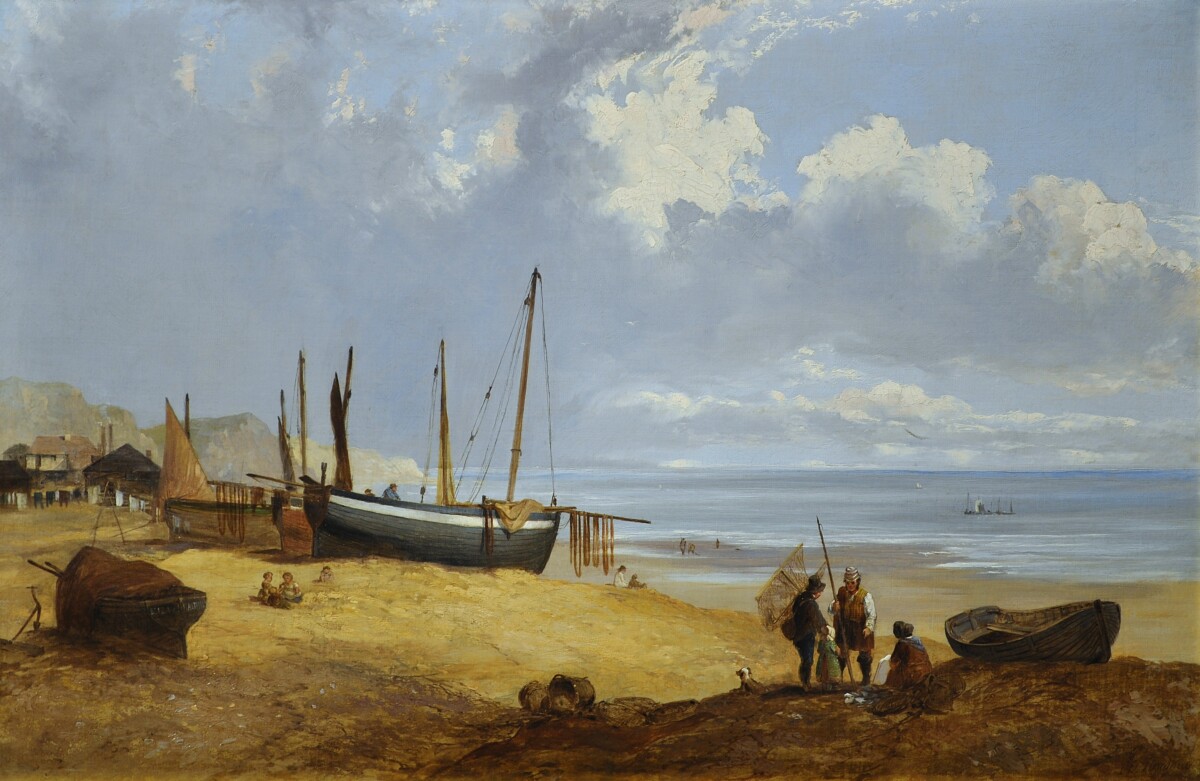
In the art trade he is usually known as James Edwin Meadows, and dealers and picture libraries list most of his work under that name. His paintings still sell well: in November 2026 Victoria Fine Art was offering A Beach Scene, oil on canvas, 20 × 30 in, signed bottom right, for £8,500.
These views by James Edward Meadows of the great goldfields cities, Ballarat and Bendigo, were commissioned by the Victorian colonial authorities for display in the Victorian Court of the Colonial and Indian Exhibition held in South Kensington in 1886.
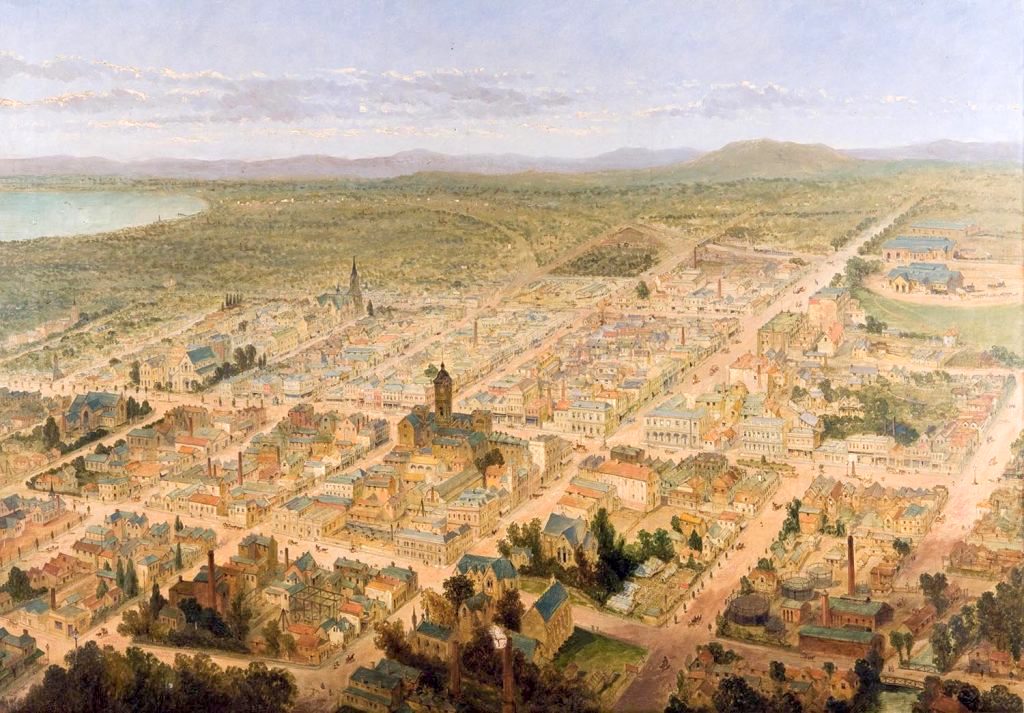
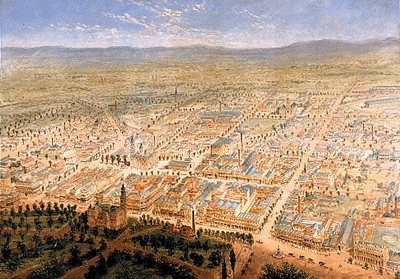
Meadows never visited Australia – to create the views, he would have used photographs of the main buildings as well as maps and plans of the cities. He would have used standard architectural principles to create an isometric image based on a notional vantage point above the south side of each city. His lack of local knowledge becomes clear when one perceives his failure to depict the steep escarpment to the east of Lydiard Street in Ballarat.